It's pretty windy right now in San Jose. And what is up with them storms or even typhoons with funny names that keeps on forming around the Philippines man. Gotta be the climate change. They showed a footage of my hometown last past week, which was Paoay, Ilocos Norte. Paoay Lake was overflowed but other areas seems to look alright, except for some old trees. Thanks for the cute lady with the Lacoste shirt for telling the news.
As I am doing some internet searching and surfing. I uploaded this video, of Sake trying to figure out a way to reach for the Dog Biscuits. I'll blog about what I have been searching and surfing in the internet later...
Showing posts with label PHILIPPINES. Show all posts
Showing posts with label PHILIPPINES. Show all posts
Thursday, October 29, 2009

Wednesday, October 7, 2009
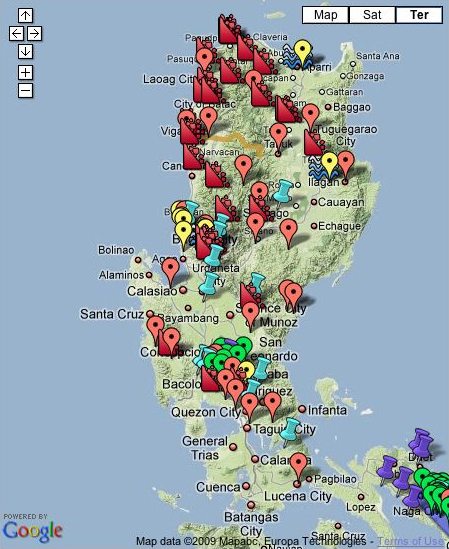
Philippines Disaster Mapping - Pepeng
Cool Interactive Mapping of the Philippines current typhoon called Pepeng. It's powered by Google, modified by the GMA Philippines News Network with the help of volunteers from the UK. This is cool. Not too long ago, before the Typhoon Ketsana hits Philippines, I was just checking out the Philippines Google Map specially the region where I was born and grew up till the age of 12. I wish they had navigators that mapped out the roads on the ground, like the ones they have for US regions, except for Hawaii. The US Google Map navigator has a little man icon where you place him on the road, and it will show 360 degree angle of the road's surroundings, showing actual photo images. I was trippen the first time I checked it, because it can actually show my front house. Philippines doesn't have that yet, but it was cool enough to see the roof top of my house from there. I was so fucking stoked man, I can actually see the elementary schools I went too, the trees where I used to take fruits from, my childhood friend's houses, the paoay church where my ancestors built, bakeries, the creek I never knew that trails all the way to the ocean, the place where I flight kites at, and so on.
I'm sure there are lots of stabbings going on too. In the other hand, I really admire their spirits man...
Anyway, check out this map or click on it for some interactive updates:

I'm sure there are lots of stabbings going on too. In the other hand, I really admire their spirits man...
Anyway, check out this map or click on it for some interactive updates:
Thursday, October 1, 2009
Ketsana, Tsunami, and Earthquakes
The last 5 days of September, these disasters happened, from the Philippines, Vietnam, Samoa, and then back to Indonesia. More like a boomerang thrown by mother nature. I just hope there's no ripple effect that would reach San Francisco and then towards the rest of the Bay Area. Not just Tsunamis but maybe like a typhoon. Otherwise I would probably start packing my stuff and runs to the hills. So instead of doing that, I made a list what you'll need for evacuation till you reach the safety zones or evacuation centers. It's just a list man, not a paranoia effect, but you just never know when natural disasters strikes out of no where.
I was just watching the GMA Filipino Channel yesterday, and they were lecturing few items that are necessary to bring with you as an emergency kit, as far of typhoon goes. And there were two things I never thought of as an important items to take with you, which was candies and a whistle blower. Candies gives you that boost when you're low in sugars, so chocolate bars are also a must in emergency evacuations. And a whistle blower, just incase you get yourself trapped somewhere. Sometimes people loses their voice for screaming or yelling too much, and a whistle blower can be a life saver.
09/23-28/09: Metro Manila, Philippines - Typhoon Ketsana (Ondoy)
09/29/09: Pago Pago, American Samoa - Earthquake and Tsunami 8.0 magnitude
09/30/09: Sumutra, Indonesia - Earthquake 7.6 magnitude
For me, I think this would be important to do first, before listing the kits for evacuation.
It's always good to have a family Fireproof Safe or a Gun Safe. The once with combination locks. I say, it's a good idea to throw in your family values in there like old family albums, and other valuables like maybe jewelries. Also your computer External Hard Drives. You might have some business plans and important documents saved up in your External Hard Drives, so throw that in there too.
Anyway, here is my list of the things I would need:
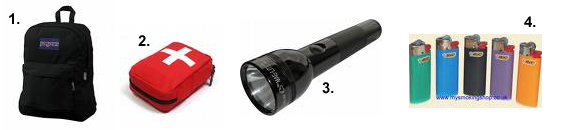
1. Backpack: Just my regular Jansport brand backpack.
2. First Aid Kit: Triple Antibiotic Ointment, Bandages, Imodium A-D, and Tylenol should be enough.
3. Flashlight: I heard separating the batteries until you use it will prevent flashlight from breaking.
4. Lighters: Grab all the lighters I can find in my drawers.

5. Hiking Boots: Sneakers works too, don't use cowboy boots or some dress shoes.
6. Khaki Cap: Sometimes I feel naked without my hat.
7. Windbreaker Jacket: With a hoody and warm enough to sleep out in the cold.
8. Shirt: Throw in an extra t-shirt.

9. Camo Short: Throw in an extra short, I move better with this kind of shorts.
10. Underwears: Throw in two extra boxers and one pair of socks.
11. Towel: Avoid other things for wiping, bring your owl towel.
12. Wallet: Your ID, use cash, cards are no use when there are no electricity.
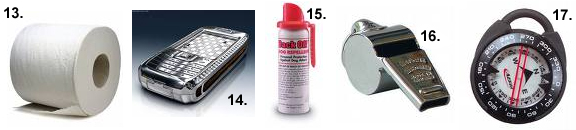
13. Toilet Papers: At least one should be enough.
14. Cell Phone: Good only if you can get a signal.
15. Dog Repellants: Defense against mad dogs and crazy people that haven't been sleeping for a year.
16. Whistle Blower: Just incase you got into a ditch and got trapped.
17. Compass: Sun rises from the east and sundown to the west.

18. Food: I prefer Nature Valley Bars.
19. Water Bottle: The one with a belt clip. And two extra bottled water.
20. Point & Shoot Camera: With a 2GB or 4GB memory card, and a car battery charger adapter.
21. Notebook and Pens: Whatever that needs to be written down, you can even doodle some images.
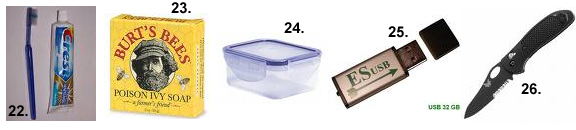
22. Toothbrush and Toothpaste: Place in a resealable plastic bag.
23. Burt's Bees Soap: Don't use other people's soaps. Any bars of soap will do.
24. Lock Lid Plastic Container: To store in all electronic gadgets, and cash or wallet, when it gets wet.
25. 35GB USB Key: Store in all personal documents, photos, and scanned old 35mm family photos.
26. Pocket Knife: For cutting ropes, boxes, opening things, and for a defense.
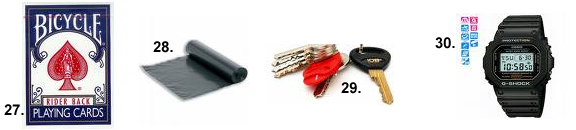
27. Playing Cards: Something to kill boredom, so play poker or 21.
28. Garbage Bags : For dirty clothes, wet cloths, wet towel, and to protect bag stuff from rain.
29. Keys: Your home keys and automobile keys.
30. Waterproof Watch: Nothing fancy. Something tough and waterproof.
Whoever reads this, I best recommend to also make your own list.
I was just watching the GMA Filipino Channel yesterday, and they were lecturing few items that are necessary to bring with you as an emergency kit, as far of typhoon goes. And there were two things I never thought of as an important items to take with you, which was candies and a whistle blower. Candies gives you that boost when you're low in sugars, so chocolate bars are also a must in emergency evacuations. And a whistle blower, just incase you get yourself trapped somewhere. Sometimes people loses their voice for screaming or yelling too much, and a whistle blower can be a life saver.
09/23-28/09: Metro Manila, Philippines - Typhoon Ketsana (Ondoy)
09/29/09: Pago Pago, American Samoa - Earthquake and Tsunami 8.0 magnitude
09/30/09: Sumutra, Indonesia - Earthquake 7.6 magnitude
For me, I think this would be important to do first, before listing the kits for evacuation.
It's always good to have a family Fireproof Safe or a Gun Safe. The once with combination locks. I say, it's a good idea to throw in your family values in there like old family albums, and other valuables like maybe jewelries. Also your computer External Hard Drives. You might have some business plans and important documents saved up in your External Hard Drives, so throw that in there too.
Anyway, here is my list of the things I would need:
1. Backpack: Just my regular Jansport brand backpack.
2. First Aid Kit: Triple Antibiotic Ointment, Bandages, Imodium A-D, and Tylenol should be enough.
3. Flashlight: I heard separating the batteries until you use it will prevent flashlight from breaking.
4. Lighters: Grab all the lighters I can find in my drawers.
5. Hiking Boots: Sneakers works too, don't use cowboy boots or some dress shoes.
6. Khaki Cap: Sometimes I feel naked without my hat.
7. Windbreaker Jacket: With a hoody and warm enough to sleep out in the cold.
8. Shirt: Throw in an extra t-shirt.
9. Camo Short: Throw in an extra short, I move better with this kind of shorts.
10. Underwears: Throw in two extra boxers and one pair of socks.
11. Towel: Avoid other things for wiping, bring your owl towel.
12. Wallet: Your ID, use cash, cards are no use when there are no electricity.
13. Toilet Papers: At least one should be enough.
14. Cell Phone: Good only if you can get a signal.
15. Dog Repellants: Defense against mad dogs and crazy people that haven't been sleeping for a year.
16. Whistle Blower: Just incase you got into a ditch and got trapped.
17. Compass: Sun rises from the east and sundown to the west.
18. Food: I prefer Nature Valley Bars.
19. Water Bottle: The one with a belt clip. And two extra bottled water.
20. Point & Shoot Camera: With a 2GB or 4GB memory card, and a car battery charger adapter.
21. Notebook and Pens: Whatever that needs to be written down, you can even doodle some images.
22. Toothbrush and Toothpaste: Place in a resealable plastic bag.
23. Burt's Bees Soap: Don't use other people's soaps. Any bars of soap will do.
24. Lock Lid Plastic Container: To store in all electronic gadgets, and cash or wallet, when it gets wet.
25. 35GB USB Key: Store in all personal documents, photos, and scanned old 35mm family photos.
26. Pocket Knife: For cutting ropes, boxes, opening things, and for a defense.
27. Playing Cards: Something to kill boredom, so play poker or 21.
28. Garbage Bags : For dirty clothes, wet cloths, wet towel, and to protect bag stuff from rain.
29. Keys: Your home keys and automobile keys.
30. Waterproof Watch: Nothing fancy. Something tough and waterproof.
Whoever reads this, I best recommend to also make your own list.
Sunday, September 6, 2009
Gerry Alanguilan - WASTED
Wasted style of artwork is definitely out of the comic book tradition. Gerry Alanguilan, a filipino comic book illustrator and writer, also inked for comic books like the X-Man and among other comics. It's funny because I saw the dude in youtube making some Beef Kaldereta not knowing he was the same guy who I had in my website from way back, as one of my favorite Filipino Illustrator. Very crafty dude, weird, sometimes has annoying personalities in videos. He also got a website to preserved the old school filipino comic books. It's an online museum of a bunch old filipino comic book artists who also work for some of the well known american comic books. I must warn you though, this comic here is a bit violent and crazy.
Thursday, June 11, 2009
Ask A Filipino
Found this in Youtube the other day. Pretty interesting.
I know these are just simple questions with simple answers, some might even find them dumb questions. But it's one of them simple questions that has a much deeper answers. So I am gonna give it a try and answer these questions based from experiences as a Filipino. These are of my opinions and facts through quick research and living within the Filipino Community. Mind as well blog about it. I was gonna make a videoblog but I have a fat tongue and talks like a... goober.
Why Filipinos are short:
Statistics says short people tend to have longer lifespan than tall people. But not all Filipinos are short. There are tall Filipinos too. Some you can't even tell they are Filipinos until you hear them speaking in Filipinos. Another explanation is that Filipinos has Aeta or Negrito DNA. These people are the first descendant of the Philippines Archipelago. They were considered as Pygmies due to a Genetic Mutation called Insular Drarfism. Filipinos today are actually taller compared to their predecessors. Wealthy Filipinos in the Philippines are also tall because they can afford vitamins to complete their nutrients in their diet. The Spaniards were also tall (spaniards who were born in the philippines) or Mestizos. Majority of these Mestizos were massacred during the Spanish American War by serving as Spanish Soldiers. The Spaniards fled back to Spain or perhaps even to Mexico after Spain sold the Philippines to the Americans for 20 million dollars. Most ethnic Mestizos that survived took the Filipino Entertainment Industries as their safe havens. Some Mestizos work their ways from the Entertainment Industry to Politics. One sample is Tito Sotto from the Eat Bulaga Show. Another is Fernando Poe Jr. Few of my favorite Fernando Poe Jr. flicks are of his series "Isang Bala Ka Lang" meaning "You Worth Only One Bullet". More like the Filipino version of Dirty Harry except Fernando Poe Jr, plays a Rebel. These two actors turned politicians are good people.
Why Filipinos are loud:
I work with lots of Filipinos from the past, from different regions, and it don't matter if they were either Tagalogs, Ilocanos, or Visayans, but most of time, the loud once are the Filipinos that grew up in the Big Cities like Metro Manila. Even Jeepney Drivers, and Tricycle Drivers can be loud too. People that lives in the mountain sides are also loud. Like the Igorot Tribes. I know this is dumb but I have a distant relative from my town with a Japanese sounding last name, he even looked Japanese. Anyway I made the conclusion that his rowdy behavior could be Japanese DNA. Or maybe it's just a common personality just like any other people with high blood pressures. I also been told that Filipinos with Kinky or Curly hair are quick tempered because of common high blood pressures, which makes them loud people. That loudness personality could also trace back from the Papua New Guinean DNA. Papuans are loud in general.
Why Filipinos are quiet:
It's normal for anyone to be shy. Most Asians are shy in general. Could also be their long lost descendants from Quanzhou of Fujian Province in China. I believe the province they were from were peaceful people, quiet, maybe loud in Chinese New Years. Plus in the Philippines, most people who lives in low land provinces didn't have to be loud, people come and go, so it's also genetic that they are simply quiet. Not that it's not normal to be quiet, some people are just not loud. Another reason, is when people in the low land provinces gets loud, they are usually made fun of or ridiculed as uncivilized Mountain People. It's a Spanish influence to make fun of Mountain Tribesman as Salvajes' (savages). Others say some Filipinos are quiet because of political oppressions for many many years from the Spaniards, Americans, Japanese, and then later the corrupt side of The Philippines Government after the first and then the second Indipendence. There were lots of domestic killings ever since from conflicts through Martial Laws, Regional Territory, Religious Diplomacy, Anti-Government Agendas, Clans vs Clans. Until there's nothing more to say and better off to just be quiet and let the guns do all the talking.
Why Filipinos are not Vegetarians:
What? Filipinos loves vegetables. And because Filipinos can eat both Vegetarian and Meat. Filipino Americans and Immigrants survived the Great Depression from eating mustard seeds, taros, sweet potato leaves, okras, sometimes stuff Americans would not even considered eatable like pig feet, pig tails, pig ears, fish heads, and fish tails. Plus Filipinos can Adobo mostly anything, all you need is soy-sauce, garlic, onions, pepper, and vinegar to season what ever you wanna Adobo like pork, chicken, beef, fish, shrimps, clams, crabs, squids, octopus, tofu, bamboo shoots, the list goes on and rather not write what the rest are. The most popular vegetarian dish with meat or without is Pinakbet from the Ilocos. Sinigang is also a favorite vegetable soup but with meat. Some Filipinos back in the day (not too sure about today) in the Philippines were actually embarrassed of eating all vegetarian diets, and considered as a sign of poverty by Spanish influence. Most Spaniards favor adding pork to their recipes.
Why are there so many Filipino DJs:
Filipinos were social groups since they settled in the Islands, always into music and dancing. Back in the day, like In 1930's The Lost Generation and The Greatest Generation were into Big Band Music. Maybe the first South East Asians to have Vinyl Record Players in their homes. And then for The Baby Boomers back in the 60's and 70's were Filipinos who embraced Western Pop Culture, and they DJ for Barrio Fiestas, Cha-Cha Contests, and Disco Clubs. Karaoke is also big, anything American and Latin Tangos. Some of these Baby Boomers also made Bands doing Cover Rock Music and had gigs in Japan. As well as collectors of Vinyl Records and Eight Tracks. Then came The Generation X as well as the birth of The Hip-Hop Culture. It was the Break-Dancing that caught the Filipino Youth's attention first, and then the music. The parents already had the turntables, and vinyl collections a basic starting points for them kids becoming DJs. Filipino parents that were nurses or wealthy enough spoiled their kids in any way they can just so their kids can socialized with American Kids. As long as they promised to get good grades and become doctors, lawyers, or nurses, they can be DJs. Turned out these kids didn't just become DJs but evolved unto cultural pioneers. Don't get me wrong now, if I have kids of my own I definitely want them to become doctors, lawyers, or nurses too. But open minded enough to let them choose a passion of their own. Like in the Arts and Music. There are lots of talented Filipinos but they had to be either masters of socializing or has good professions to back up their dreams. In some ways, skills are made rather than being born to it. Musical Savants usually comes 1 out of 1000 or less. Or more. Philippines isn't a big country. But if you go to the Philippines most of them knows more American Pop Music from the 70's and 80's than some Americans. They could sing all these music like taking a Tabo Shower in that one Filipino Show called Wooowee, my folks watches Wowowee religiously. They even went to their shows.
Why Filipinos are organized:
True, maybe because of hundreds of years of oppressions and disciplines by Catholic Ideologies. Perhaps it has to do with creativity. Even in a messy unorganized places like in the poor communities, the Filipinos living there has organize ways of thinking. Survival purposes. They know what are worth organizing and not really worth organizing. Sadly some don't really care or lost all their hopes and turned unto something else. The main motive is to get out of the country and make money outside the Philippines. You can tell by the way Filipinos write on a piece of paper. The way they write are clean and organized - when they take notes. Education for a success are worth organizing than organizing the bad environment they lived on. But when these same people succeed and earned enough or have made it, they evolved by organizing their environment, and proud to socialize to other Filipinos and shows off their homes. A sense of pride and self respect.
I know these are just simple questions with simple answers, some might even find them dumb questions. But it's one of them simple questions that has a much deeper answers. So I am gonna give it a try and answer these questions based from experiences as a Filipino. These are of my opinions and facts through quick research and living within the Filipino Community. Mind as well blog about it. I was gonna make a videoblog but I have a fat tongue and talks like a... goober.
Why Filipinos are short:
Statistics says short people tend to have longer lifespan than tall people. But not all Filipinos are short. There are tall Filipinos too. Some you can't even tell they are Filipinos until you hear them speaking in Filipinos. Another explanation is that Filipinos has Aeta or Negrito DNA. These people are the first descendant of the Philippines Archipelago. They were considered as Pygmies due to a Genetic Mutation called Insular Drarfism. Filipinos today are actually taller compared to their predecessors. Wealthy Filipinos in the Philippines are also tall because they can afford vitamins to complete their nutrients in their diet. The Spaniards were also tall (spaniards who were born in the philippines) or Mestizos. Majority of these Mestizos were massacred during the Spanish American War by serving as Spanish Soldiers. The Spaniards fled back to Spain or perhaps even to Mexico after Spain sold the Philippines to the Americans for 20 million dollars. Most ethnic Mestizos that survived took the Filipino Entertainment Industries as their safe havens. Some Mestizos work their ways from the Entertainment Industry to Politics. One sample is Tito Sotto from the Eat Bulaga Show. Another is Fernando Poe Jr. Few of my favorite Fernando Poe Jr. flicks are of his series "Isang Bala Ka Lang" meaning "You Worth Only One Bullet". More like the Filipino version of Dirty Harry except Fernando Poe Jr, plays a Rebel. These two actors turned politicians are good people.
Why Filipinos are loud:
I work with lots of Filipinos from the past, from different regions, and it don't matter if they were either Tagalogs, Ilocanos, or Visayans, but most of time, the loud once are the Filipinos that grew up in the Big Cities like Metro Manila. Even Jeepney Drivers, and Tricycle Drivers can be loud too. People that lives in the mountain sides are also loud. Like the Igorot Tribes. I know this is dumb but I have a distant relative from my town with a Japanese sounding last name, he even looked Japanese. Anyway I made the conclusion that his rowdy behavior could be Japanese DNA. Or maybe it's just a common personality just like any other people with high blood pressures. I also been told that Filipinos with Kinky or Curly hair are quick tempered because of common high blood pressures, which makes them loud people. That loudness personality could also trace back from the Papua New Guinean DNA. Papuans are loud in general.
Why Filipinos are quiet:
It's normal for anyone to be shy. Most Asians are shy in general. Could also be their long lost descendants from Quanzhou of Fujian Province in China. I believe the province they were from were peaceful people, quiet, maybe loud in Chinese New Years. Plus in the Philippines, most people who lives in low land provinces didn't have to be loud, people come and go, so it's also genetic that they are simply quiet. Not that it's not normal to be quiet, some people are just not loud. Another reason, is when people in the low land provinces gets loud, they are usually made fun of or ridiculed as uncivilized Mountain People. It's a Spanish influence to make fun of Mountain Tribesman as Salvajes' (savages). Others say some Filipinos are quiet because of political oppressions for many many years from the Spaniards, Americans, Japanese, and then later the corrupt side of The Philippines Government after the first and then the second Indipendence. There were lots of domestic killings ever since from conflicts through Martial Laws, Regional Territory, Religious Diplomacy, Anti-Government Agendas, Clans vs Clans. Until there's nothing more to say and better off to just be quiet and let the guns do all the talking.
Why Filipinos are not Vegetarians:
What? Filipinos loves vegetables. And because Filipinos can eat both Vegetarian and Meat. Filipino Americans and Immigrants survived the Great Depression from eating mustard seeds, taros, sweet potato leaves, okras, sometimes stuff Americans would not even considered eatable like pig feet, pig tails, pig ears, fish heads, and fish tails. Plus Filipinos can Adobo mostly anything, all you need is soy-sauce, garlic, onions, pepper, and vinegar to season what ever you wanna Adobo like pork, chicken, beef, fish, shrimps, clams, crabs, squids, octopus, tofu, bamboo shoots, the list goes on and rather not write what the rest are. The most popular vegetarian dish with meat or without is Pinakbet from the Ilocos. Sinigang is also a favorite vegetable soup but with meat. Some Filipinos back in the day (not too sure about today) in the Philippines were actually embarrassed of eating all vegetarian diets, and considered as a sign of poverty by Spanish influence. Most Spaniards favor adding pork to their recipes.
Why are there so many Filipino DJs:
Filipinos were social groups since they settled in the Islands, always into music and dancing. Back in the day, like In 1930's The Lost Generation and The Greatest Generation were into Big Band Music. Maybe the first South East Asians to have Vinyl Record Players in their homes. And then for The Baby Boomers back in the 60's and 70's were Filipinos who embraced Western Pop Culture, and they DJ for Barrio Fiestas, Cha-Cha Contests, and Disco Clubs. Karaoke is also big, anything American and Latin Tangos. Some of these Baby Boomers also made Bands doing Cover Rock Music and had gigs in Japan. As well as collectors of Vinyl Records and Eight Tracks. Then came The Generation X as well as the birth of The Hip-Hop Culture. It was the Break-Dancing that caught the Filipino Youth's attention first, and then the music. The parents already had the turntables, and vinyl collections a basic starting points for them kids becoming DJs. Filipino parents that were nurses or wealthy enough spoiled their kids in any way they can just so their kids can socialized with American Kids. As long as they promised to get good grades and become doctors, lawyers, or nurses, they can be DJs. Turned out these kids didn't just become DJs but evolved unto cultural pioneers. Don't get me wrong now, if I have kids of my own I definitely want them to become doctors, lawyers, or nurses too. But open minded enough to let them choose a passion of their own. Like in the Arts and Music. There are lots of talented Filipinos but they had to be either masters of socializing or has good professions to back up their dreams. In some ways, skills are made rather than being born to it. Musical Savants usually comes 1 out of 1000 or less. Or more. Philippines isn't a big country. But if you go to the Philippines most of them knows more American Pop Music from the 70's and 80's than some Americans. They could sing all these music like taking a Tabo Shower in that one Filipino Show called Wooowee, my folks watches Wowowee religiously. They even went to their shows.
Why Filipinos are organized:
True, maybe because of hundreds of years of oppressions and disciplines by Catholic Ideologies. Perhaps it has to do with creativity. Even in a messy unorganized places like in the poor communities, the Filipinos living there has organize ways of thinking. Survival purposes. They know what are worth organizing and not really worth organizing. Sadly some don't really care or lost all their hopes and turned unto something else. The main motive is to get out of the country and make money outside the Philippines. You can tell by the way Filipinos write on a piece of paper. The way they write are clean and organized - when they take notes. Education for a success are worth organizing than organizing the bad environment they lived on. But when these same people succeed and earned enough or have made it, they evolved by organizing their environment, and proud to socialize to other Filipinos and shows off their homes. A sense of pride and self respect.
Sunday, March 1, 2009
Sungka

Also known as Mancala for International name. I ain't sure if Sungka are still popular in the Philippines but it sure does brings back some memories as a kid growing up there. Sungka is an ancient game from all over asia. South East Asia for the most part. They even play this game in Africa.

Sungka is a Philippine mancala game which is today also played wherever Philippine migrants are living; e.g. in Taiwan, Germany, and the USA. Like the closely related congkak it is traditionally a women's game. Sungka was first described outside of Asia in 1894 by the American ethnologist Stewart Culin.
Sungka is similar to many other Southern Asian mancala games such as naranj (Maldives), dakon (Java), congkak (Malaysia, Singapore, Indonesia) and tchonka (Marianas). The game differs from kalah which is known in North America and Europe in being a multi-lap game. Another important difference is that the first move is executed simultaneously in sungka which is meant to balance the game. Sungka is distinguished from congkak by being played counterclockwise and also by some other minor rule differences.
It's hard to explain how to play the game but you'll get the idea while you play it here. On this game you start with 4 pebbles on each of the 6 holes, instead of 7 pebbles on each 6 holes: PLAY MANCALA

Tuesday, February 24, 2009
Filipino Food
Since Cuisines is one of my interest subjects I am going to write more on Filipino Cuisines. In addition to what I wrote about Anthony Bourdain - Philippines. As a Filipino myself, most common food for a daily routine is not always the "traditional" dish but also Canned Food, like: Sardines, Spams, and Corned Beef. Dried or Smoked Fish is also common. A more upscale routine dish can also be cured meat called Tocino and different kinds of Sausages called Longanisa. These type of food are also International and not just for Filipinos. Canned Food were introduced in the Philippines by the American Soldiers in WWII.



International Canned Food. Also typical for most Pinoy Diet. Instant Noodles are also a big part of the list.

These are Longanisa. There are two types of Longanisa that I know of. The Ilocano Longanisa and the Tagalog Longanisa. Ilocano Versions are more tangy and more smoked or dried. And It's basically pork meat and lard mixed together with salt, pepper, vinegar, and garlic. Lots of garlic. Pork intestines are used for the sausage skins. The Tagalog Longanisa or Southern Version are more sweeter, same method except it's added with some Sweet Curing Powder to have that sweet flavor to it just like Tocino. Due to the high value currency in the Philippines, Southern Longanisas are evolving to a size of a quail egg. Some tourists are even trippen' what they are, and simply being introduced by tour guides as Finger Food or Pulutan (beer snack). Like how hamburgers in America today are becoming more like muffins. Obviously it's an alternative against economic crises.

This here is Tocino. Little portion on this can get you eating a whole lot of rice if you are Pinoy or Asian in general (cultured by it's origin). I used to have this girlfriend who wasn't asian and could eat a whole lot of it without the help of rice. It was a bit insulting to me when she says that "gneee... rice are for side dish only." So wrooong man. Rice is the center of the plate in some countries.

Toyo (dried or smoked fish). Big fish to small fish. From squids to eels. The Vikings also do the same method but with shark meat, I've seen it one time in Bizzare Food. Toyo is or was considered a poor man's diet but today Filipino Chefs are experimenting more and more on evolving Toyo as an upscale cuisine.

As I write about Dried to Smoked Meat Products, it sorta gives me the resemblance of how the Buccaneer Pirates used to eat back in the 1700 or earlier than that. I even found an old illustration of an old pirate making Lechon which is the image you see on the left.
I got the image from this page: The Pirates and Buccaneers.

This is a Lechon. It's traditional like how the Hawaiians cook their pork except not underground being cooked by hot stones but by bamboo poles and over a fire. Different Regions of the Philippines have their own stuffing for their Lechon.

Exactly who were the Buccaneers. Surely and most likely you hear about them in Novel Books, History Books, and even in the Fantasy Movies where they venture navigating through out the Caribbean Shores back in the 1700 or 1600. Buccaneers are also known as Pirates. Buccaneers came from the word buccan, a wooden frame for smoking meat. I hope who ever reads this won't get the idea that I am pushing an issue to claim some historical events for another culture. I am just writing about the resemblance on how the Buccaneers prepares their food the same way how Filipinos do theirs. Besides, during the times of the Caribbean Pirates were also the times when the European Fleets were navigating in the Malay Archipelagos (The Philippines).
Wikipedia: The buccaneers were pirates who attacked Spanish and French shipping in the Caribbean Sea during the late 17th century.
The term buccaneer is now used generally as a synonym for pirate. Originally, buccaneer crews were larger, more apt to attack coastal cities, and more localized to the Caribbean than later pirate crews who sailed to the Indian Ocean on the Pirate Round in the late 17th century.
The term buccaneer derives from the Arawak word buccan, a wooden frame for smoking meat, hence the French word boucane and the name boucanier for French hunters who used such frames to smoke meat from feral cattle and pigs on Hispaniola (now Haiti and the Dominican Republic). English colonists anglicised the word boucanier to buccaneer.
International Canned Food. Also typical for most Pinoy Diet. Instant Noodles are also a big part of the list.
These are Longanisa. There are two types of Longanisa that I know of. The Ilocano Longanisa and the Tagalog Longanisa. Ilocano Versions are more tangy and more smoked or dried. And It's basically pork meat and lard mixed together with salt, pepper, vinegar, and garlic. Lots of garlic. Pork intestines are used for the sausage skins. The Tagalog Longanisa or Southern Version are more sweeter, same method except it's added with some Sweet Curing Powder to have that sweet flavor to it just like Tocino. Due to the high value currency in the Philippines, Southern Longanisas are evolving to a size of a quail egg. Some tourists are even trippen' what they are, and simply being introduced by tour guides as Finger Food or Pulutan (beer snack). Like how hamburgers in America today are becoming more like muffins. Obviously it's an alternative against economic crises.

This here is Tocino. Little portion on this can get you eating a whole lot of rice if you are Pinoy or Asian in general (cultured by it's origin). I used to have this girlfriend who wasn't asian and could eat a whole lot of it without the help of rice. It was a bit insulting to me when she says that "gneee... rice are for side dish only." So wrooong man. Rice is the center of the plate in some countries.
Toyo (dried or smoked fish). Big fish to small fish. From squids to eels. The Vikings also do the same method but with shark meat, I've seen it one time in Bizzare Food. Toyo is or was considered a poor man's diet but today Filipino Chefs are experimenting more and more on evolving Toyo as an upscale cuisine.

As I write about Dried to Smoked Meat Products, it sorta gives me the resemblance of how the Buccaneer Pirates used to eat back in the 1700 or earlier than that. I even found an old illustration of an old pirate making Lechon which is the image you see on the left.
I got the image from this page: The Pirates and Buccaneers.
This is a Lechon. It's traditional like how the Hawaiians cook their pork except not underground being cooked by hot stones but by bamboo poles and over a fire. Different Regions of the Philippines have their own stuffing for their Lechon.

Exactly who were the Buccaneers. Surely and most likely you hear about them in Novel Books, History Books, and even in the Fantasy Movies where they venture navigating through out the Caribbean Shores back in the 1700 or 1600. Buccaneers are also known as Pirates. Buccaneers came from the word buccan, a wooden frame for smoking meat. I hope who ever reads this won't get the idea that I am pushing an issue to claim some historical events for another culture. I am just writing about the resemblance on how the Buccaneers prepares their food the same way how Filipinos do theirs. Besides, during the times of the Caribbean Pirates were also the times when the European Fleets were navigating in the Malay Archipelagos (The Philippines).
Wikipedia: The buccaneers were pirates who attacked Spanish and French shipping in the Caribbean Sea during the late 17th century.
The term buccaneer is now used generally as a synonym for pirate. Originally, buccaneer crews were larger, more apt to attack coastal cities, and more localized to the Caribbean than later pirate crews who sailed to the Indian Ocean on the Pirate Round in the late 17th century.
The term buccaneer derives from the Arawak word buccan, a wooden frame for smoking meat, hence the French word boucane and the name boucanier for French hunters who used such frames to smoke meat from feral cattle and pigs on Hispaniola (now Haiti and the Dominican Republic). English colonists anglicised the word boucanier to buccaneer.
Wednesday, February 18, 2009
Anthony Bourdain - Philippines
The show was about the Philippines which was never been shown ever before as part of Asian/Pacific cuisine since the show started. Other Asian countries was documented but the Philippines. And finally this one Filipino New Yorker named Augusto got Anthony Bourdain's attention from one of the many audition tapes. I say Augusto was a bit naive for he only been in the Philippines for about a week. Few things I notice about Augusto that he lacked about the Philippines. Which is, theres a difference between visiting and settling among the natives. Depends on how stable you view yourself coming from abroad. And how long that would last to their knowledge. Unless if you speak their languages real well, play their games, dance their music, then you get the pinoy pass. Don't just take my words for it because it all depends where you are with the natives.
The show was actually cool. There was no tourist attraction joints, it was basically the every day life of where people usually get their cooking ingredients and where most people eat at. Lots of Mamas Papas Restaurants, Street Vendors, and big to small Markets. The show journeyed from Manila to Pangpanga to Cebu. Most of the ingredients that was shown are most likely from Up North. The Ilocos regions. The south have more spices and coconuts than the Northern Area of the Philippines. I think Pangpangan cooking are better or targeted the real essence of Filipino Cuisines than any other regions. Perhaps Pangpangan Folks are just more vocal about their cuisines.
The show ended with a Lechon (roast pig) at Cebu where Augusto's and his family visited. Lechon is typical for Filipino Feast. Most of the cuisines showed in the program were traditional home food for Filipinos like Adobo, Tinola (chicken stew), Bulalo (bone marrow stew), Papaitan (bile and guts stew), Penakbet (vegetable stew), and Sinigang (like gumbo = crabs, mussels, shrimps, fish, pork, veggies, and etc.).
About Gumbo - maybe the Filipino settlers of Louisiana in the 1600 brought Sinigang in the US and then later became known as Gumbo. After blending in with the African Americans and the French came the Cajun Culture. Based from watching the Food Network, Sinigang in the Philippines was probably a Filipino version of Paella which is from Spain. The ingredients is pretty much similar except Paella has some rice added to it.
Here is Anthony Bourdain's blog about the show.
The show was actually cool. There was no tourist attraction joints, it was basically the every day life of where people usually get their cooking ingredients and where most people eat at. Lots of Mamas Papas Restaurants, Street Vendors, and big to small Markets. The show journeyed from Manila to Pangpanga to Cebu. Most of the ingredients that was shown are most likely from Up North. The Ilocos regions. The south have more spices and coconuts than the Northern Area of the Philippines. I think Pangpangan cooking are better or targeted the real essence of Filipino Cuisines than any other regions. Perhaps Pangpangan Folks are just more vocal about their cuisines.
The show ended with a Lechon (roast pig) at Cebu where Augusto's and his family visited. Lechon is typical for Filipino Feast. Most of the cuisines showed in the program were traditional home food for Filipinos like Adobo, Tinola (chicken stew), Bulalo (bone marrow stew), Papaitan (bile and guts stew), Penakbet (vegetable stew), and Sinigang (like gumbo = crabs, mussels, shrimps, fish, pork, veggies, and etc.).
About Gumbo - maybe the Filipino settlers of Louisiana in the 1600 brought Sinigang in the US and then later became known as Gumbo. After blending in with the African Americans and the French came the Cajun Culture. Based from watching the Food Network, Sinigang in the Philippines was probably a Filipino version of Paella which is from Spain. The ingredients is pretty much similar except Paella has some rice added to it.
Here is Anthony Bourdain's blog about the show.
Friday, January 9, 2009
Why the Influences
Why some of my music sounds more like the Orient when geographically I grew up in the US and from the Philippines. Not because I am trying to stereotype certain sounds. Most of my sounds comes out naturally using my instruments. The town called Paoay (formally called Bombay) that I grew up on in the Philippines used to channel these Cantonese and Mandarin stations from our television, and they used to have these Chinese operas. Although it was a black and white television and a bit staticky, it didn't really matter. They sounded pure and soulful to me, and gave me the natural ideas to my music today. Ilocos area are known to have lots of Chinese descendants coming from Fujian and Taiwan. Historians says even the Japanese settled there way before WW2. Eventually, most of them lost their identities due to Spanish rules back in the Spanish Colonialism. All these different groups also got together and built St. Augustine Church designed as a fortress to defend the town against incoming pirates. Today there are still some Chinese business owners that sells tires and medicines back in Paoay and South Indians that sells stereos, boombox, radios, and televisions from further down the north east of my town. Almost like the area I live on today - Chinese folks that lived in Vietnam, Indian folks from Punjabi, along side with the Latinos, and Filipinos.
I am done with my first Album. As a hobbyist and independent also means relying on my own finance to support it. Still have more to learn about the production side and I may have to take classes for that later. One thing for sure, passing this one test to get a license will finance that. Not just for me but to put some extra something something on the family table along with some bonuses.
If wondering where to get your tracks out for sale, here are few of them that are cool. Places like: Tunecore and CD Baby. Where they also sell them for you electronically like in iTunes.
I am done with my first Album. As a hobbyist and independent also means relying on my own finance to support it. Still have more to learn about the production side and I may have to take classes for that later. One thing for sure, passing this one test to get a license will finance that. Not just for me but to put some extra something something on the family table along with some bonuses.
If wondering where to get your tracks out for sale, here are few of them that are cool. Places like: Tunecore and CD Baby. Where they also sell them for you electronically like in iTunes.
Subscribe to:
Posts (Atom)